
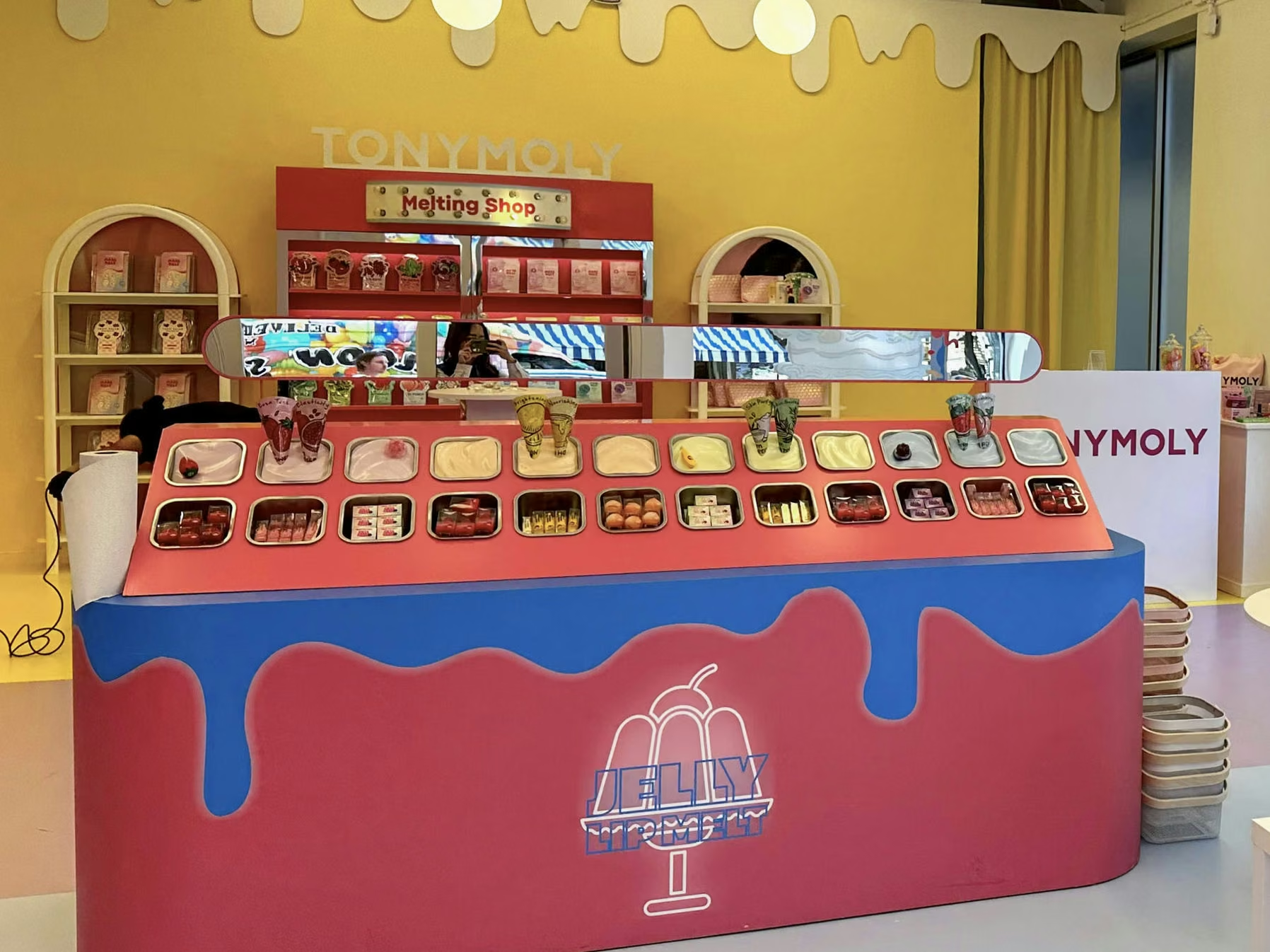
In the city that never sleeps, time rarely slows down. With so little of it to spare, the pressure to spend it on something fulfilling only grows.
We’re living through an era of digital fatigue, and attention is drifting toward whatever feels most human. People are looking for ways to make their lives a little brighter, and a new wave of brands is meeting them there.
From bedazzled flowers to heart-shaped fruit on your morning pancakes, whimsy has taken many forms lately. The trend, known as “whimsymaxxing,” has moved off the internet and into the real world, and pop-ups are the perfect place to test it.
Pop-ups give consumers a space curated just for them and a chance to connect with like-minded people. They’re built on the idea that joy can be chic. The experience comes first, and the product is a bonus. When there’s something physical to show up to, you’re not just a customer; you’re part of a community. And what does a community offer? Permission to play.
People are actively seeking that out. Eventbrite’s inaugural Social Study report found that 79% of 18- to 35-year-olds plan to attend more in-person events, and demand for local events is growing. But they don’t want to perform inside something someone else has already scripted; they want experiences that give them agency. As the report puts it, “connection without pressure is the new social currency.”
Pop-ups strike that balance. They build a world for you to step into, then hand you the controls. They’re customizable by design, and brands can refresh the concept without rebuilding the whole experience. When you can touch, taste, hear and share something in person, it stays with you far longer than an ad or digital campaign ever could.
Design matters here, too. Color plays a central role in experiential marketing, and a pop-up can change its palette in ways a permanent storefront can’t. White, a timeless choice for small spaces, suggests simplicity. Blue builds trust and helps customers relax. Yellow communicates positive energy, while orange signals enthusiasm and can encourage shoppers to linger. The right palette depends on what a brand wants to convey at a given moment, and that goal can shift quickly. A pop-up is built for exactly that kind of versatility.
In a city like New York, on a street lined with traditional brownstones and towering skyscrapers, standing out is half the battle. According to the Von Restorff effect, an item that differs from its surroundings is the one most likely to be remembered. Permanent storefronts face stricter regulations on their appearance, meant to protect visual harmony and long-term property value. Pop-ups have more room to go all-in on their branding, and it pays off. Once someone is drawn in, another quirk of psychology takes over: our brains divide the day into chapters, and a dramatic change of setting acts as a reset point. That’s why an immersive space feels like an event rather than another errand in someone’s day.
Say you work a 9-to-5. You’ve spent the whole morning glued to your screen, and lunch is your only chance to step away. Given the choice between a gray-walled flagship store you’ve already visited and a bright pink activation that just popped up on your block, you’d probably spend that hour on whatever feels new. That’s exactly what pop-ups are designed for: they counter digital fatigue and bring a little whimsy back into your day.